

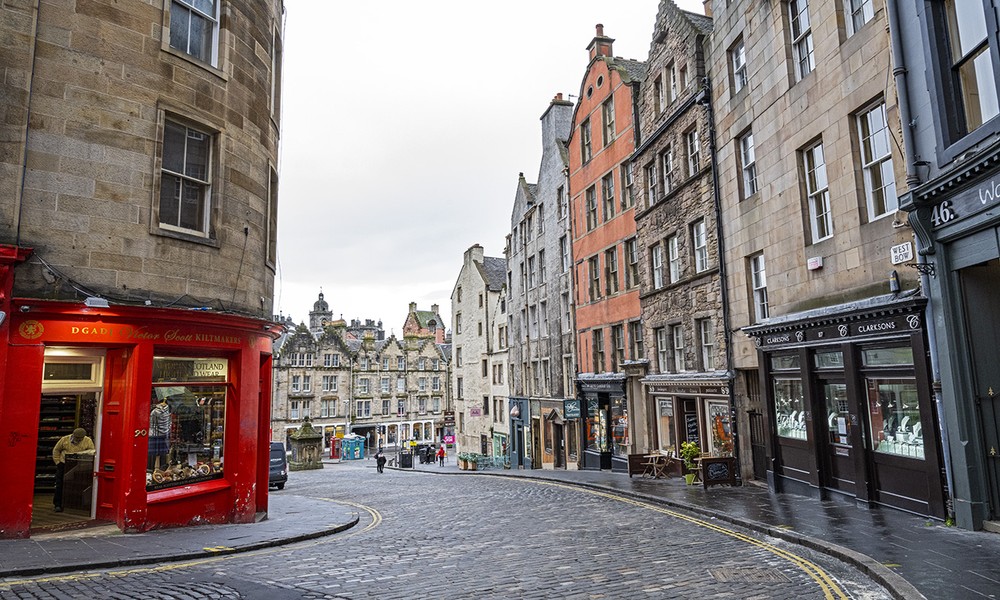
Edinburgh is Scotland’s capital and one of Europe’s most dramatically situated cities, built across a series of volcanic hills with a medieval castle at its crown. It holds two UNESCO World Heritage Sites, a working royal palace, and one of Britain’s most celebrated annual arts Edinburgh festivals.
Most visitors see the postcard version – the travelers who look deeper find a city that genuinely rewards curiosity.
The Castle Everyone Visits and the View Nobody Expects
Edinburgh Castle sits on Castle Rock, a volcanic plug formed 350 million years ago. The fortress has been continuously occupied since the 12th century and houses the Scottish Crown Jewels – the oldest surviving royal regalia in Britain. However, the view north across the New Town toward the Firth of Forth stops most visitors completely still. Arrive at 9:30 AM when the gates open, before the tour groups arrive in volume.
The Royal Mile runs one mile downhill from the Castle to the Palace of Holyroodhouse, the King’s official Scottish residence. Therefore, walking its full length – poking into the closes (narrow alleyways branching left and right) rather than staying on the main street – reveals the Old Town’s true medieval texture.
Why Arthur’s Seat Changes How You See the Whole City
Arthur’s Seat is an ancient volcano rising 251 metres above sea level, sitting inside Holyrood Park at the city’s eastern edge. Edinburgh’s most underrated experience costs nothing and takes roughly 45 minutes to climb at a moderate pace. Additionally, the 360-degree summit view across the city, the Pentland Hills, and the Firth of Forth is clearer and more expansive than any paid observation point.
The best conditions appear on weekday mornings before 10 AM, when the path stays quiet and low cloud occasionally clears dramatically.
How to Structure Three Days Without Missing What Matters
Prioritise these in sequence:
- Start at Edinburgh Castle on day one – book timed entry online to avoid the 45-minute queue at the gate.
- Walk the Royal Mile slowly on day one afternoon, entering St Giles’ Cathedral for its medieval stonework and thistle chapel.
- Climb Arthur’s Seat early on day two before visiting the Palace of Holyroodhouse directly below at the hill’s base.
- Dedicate day two afternoon to the Scottish National Museum, which covers 5,000 years of history across five floors entirely free of charge.
- Reserve the Scottish National Gallery for day three, housing works by Rembrandt, Velázquez, and Raeburn in a neoclassical building on the Mound.
As a result of the compact geography, all five experiences sit within 20 minutes on foot of each other. Book Edinburgh Castle tickets the evening before you arrive, walk downhill from there, and let the city’s extraordinary vertical landscape do the rest.